

Foam adhesive tape viscoelastic stress relaxation thermal movement should be evaluated as a joint-design question, not as a promise that foam tape will absorb any mismatch between a metal organizer and a wall. A buyer needs to identify the substrates, bonded area, joint thickness, part geometry, installation condition, and expected movement, then ask the tape supplier and product engineer to confirm a suitable method for the actual assembly. Viscoelastic foam may accommodate some deformation over time, but its behavior depends on the specific tape construction, load, temperature, surfaces, and application process. No generic product-page statement proves suitability for a bathroom organizer or a particular service condition.
The buyer’s scope here is movement accommodation and bond strain—not a general comparison of adhesive types, a consumer installation tutorial, or a load-capacity claim. A wall-mounted organizer can combine metal, adhesive components, and a wall surface. Each interface and its installation instructions must be defined. The examples below are procurement questions; they do not establish that a specific Koitor product uses adhesive tape.
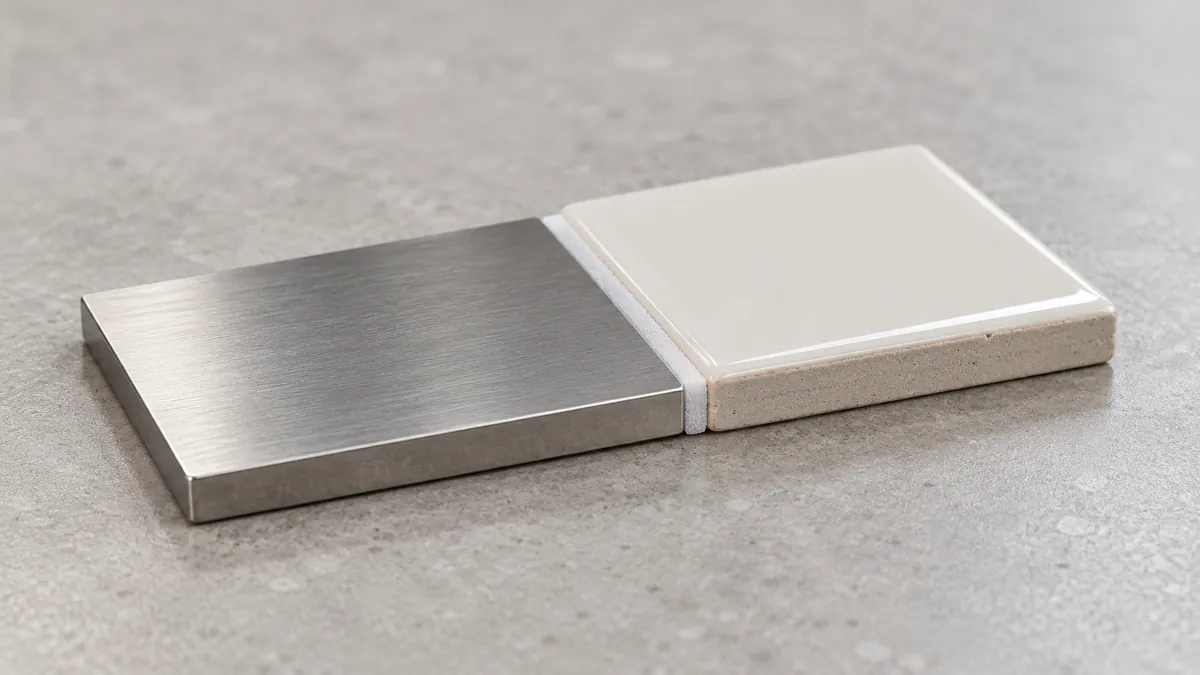
What does stress relaxation mean for a taped hardware joint?
Stress relaxation describes how stress in a viscoelastic material can change with time while deformation is maintained. In a bonded assembly, that behavior may influence how a foam core responds to sustained strain or movement, but the result is product- and condition-specific. It does not mean the bond can carry unlimited load, recover from every deformation, or compensate for poor design.
Movement can arise when bonded parts have different thermal expansion, when a polymer component changes dimension with temperature, when an assembly is forced into place, or when a substrate flexes in use. A metal mounting plate bonded to tile is not automatically equivalent to an automotive trim assembly or another application described in a tape datasheet. The buyer must account for the actual part size, substrate pair, geometry, environment, and stresses the joint experiences.
The 3M product information for Acrylic Foam Tape GT7130 describes a viscoelastic foam core, conformability, and stress-relaxation properties in its intended product context. That is useful evidence that such properties are part of some tape designs. It is not a selection recommendation for a bathroom organizer, does not define an allowable thermal movement for this project, and does not replace testing or technical guidance for the selected tape and substrates.
Which assembly inputs must a buyer define first?
The tape supplier cannot assess the joint from the organizer’s name alone. Identify both bonded surfaces and the material/finish condition at the bond area. A coated metal plate, bare metal, plastic mounting pad, tile, glass, or painted wall can have different surface-energy, cleanliness, texture, and preparation considerations. The exact substrate should be stated rather than inferred from a product image.
The RFQ or engineering brief should also define:
- Part drawing and revision, mounting geometry, tape location, and intended bond area.
- Substrate materials and finishes on each side of the bond, including coatings or primers if specified.
- Tape family and thickness under consideration, or a process for supplier recommendation and approval.
- Bond-line geometry, overlap, edge exposure, curvature, and any local gaps or steps.
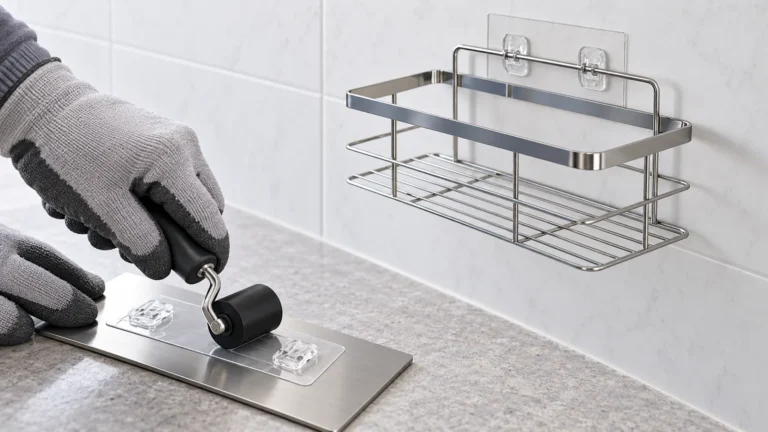
- Assembly sequence, application pressure/process, dwell or conditioning requirements from the tape maker, and installation instructions.
- Expected environment and movement conditions relevant to the product’s intended use, without substituting unsupported generic values.
- The sample state, inspection evidence, and who approves the adhesive system for the finished assembly.
These details do not themselves select a tape. The tape maker’s current technical data and the design owner’s requirements govern. If the surfaces or environment are not confirmed, the supplier should raise that gap before sample approval. Do not write a purchase specification that says “foam adhesive tape” but leaves the bond area, substrate preparation, or change approval undefined.
How can thermal movement affect a mixed-material bond line?
When bonded materials respond differently to a temperature change, the interface may experience relative displacement. The magnitude and direction depend on the material pair, geometry, temperature range, constraints, and assembly condition. The tape layer may deform in response, but the joint also includes adhesive interfaces and substrates. A flexible core cannot remove the need to consider how the load is distributed or whether the bond edges are exposed to peel or other concentrated stress.
For a bathroom or home-storage accessory, a buyer should frame the question around the real product and installation: what components are joined, where movement is expected, which surfaces are constrained, and what constitutes an unacceptable outcome? Do not transplant a thermal expansion number or tape thickness from a different product. If the product includes a plastic cover, metal body, tile, or other mixed materials, identify the actual grades or families when known and let the responsible engineer or tape supplier evaluate the assembly.
Stress can also be introduced during assembly. If one part is stretched, compressed, or forced into position while the tape is applied, the bond may start with residual strain. The 3M design discussion on acrylic foam tape selection notes that mounting stress and fit can affect the bond line. Its automotive examples are not bathroom-hardware qualification data, but they reinforce a useful buyer question: are both parts relaxed and properly fitted when the tape is applied?
What should buyers compare when reviewing a tape proposal?
Compare the proposal against the actual joint and evidence plan, not only nominal thickness or a broad claim such as “high strength.” Ask the supplier to distinguish the tape construction, intended substrates, preparation, application, and movement conditions covered by the cited technical information. If the product maker recommends a particular surface preparation or pressure, record it in the approved process and confirm it can be followed consistently.
| Review area | Pergunta do comprador | Provas a solicitar | Limit of the evidence |
|---|---|---|---|
| Substrate match | Does the tape maker’s information cover both actual surfaces and their finish state? | Current data for the exact tape and written technical guidance for the substrate pair | A generic data sheet may not cover the finished production surfaces |
| Joint geometry | Is the bond area, thickness, curvature, and edge exposure represented? | Drawing review and representative bonded sample | A flat coupon may not reproduce the product geometry |
| Thermal movement | What movement is expected, and how is it accommodated in this design? | Engineering assumptions, supplier assessment, and a defined sample/test plan if needed | A stress-relaxation statement alone is not a movement limit |
| Application | Are surface preparation, pressure, alignment, and assembly timing controlled? | Work instruction and process demonstration on representative parts | A correctly selected tape can still fail under an uncontrolled application |
| Acceptance | What result constitutes approval, and who owns it? | Sample record, inspection/test method, and named approval authority | A photograph or marketing statement is not a qualification result |
Do not compare different tape products using one property in isolation. Thickness, conformability, adhesive chemistry, core behavior, and substrate compatibility work together. The buyer should ask for a recommendation for the specific design, then preserve the supplier’s rationale and limits. If the tape supplier cannot confirm an application, the product owner may need a different design or qualified test plan.
What sample evidence is useful before release?
Use a representative assembly that matches the intended part geometry, substrate finish, bond location, and application sequence. A small coupon can help screen adhesion or handling, but it does not necessarily reproduce the full assembly’s constraints, thermal movement, load path, or exposed edges. Record whether the sample is a coupon, a partial assembly, or a complete organizer. Identify the tape lot or product designation where traceability is part of the project.
Agree on what the sample review will evaluate. It could include location and coverage, bond-line appearance, edge lift, fit, or a defined functional test. If a performance test is required, specify the method, conditioning, sample quantity, fixture, and acceptance criteria with qualified technical input. Do not invent load, temperature, duration, or service-life limits based on a product brochure. A sample that looks good immediately after application does not establish long-term behavior under untested conditions.
The assembly record should show how surfaces were prepared, how the parts were positioned, and what application controls were used. Photos can document orientation and visible bond coverage, but should not be treated as measurements unless the method supports that use. Keep the sample ID and revision with every observation. If the sample used a different substrate, primer, or production route than the planned product, clearly mark the gap and do not overstate what the result proves.

What changes should trigger a new review?
Reassess the joint when a change could affect material movement, bond area, preparation, or application. For foam adhesive tape viscoelastic stress relaxation thermal movement, even a changed substrate finish or bond geometry can alter whether prior sample evidence remains representative. Potential triggers include a different substrate or coating, revised plate geometry, tape family or thickness, primer, surface-cleaning method, mounting location, assembly pressure, supplier, or installation instruction. A change in the intended environment or service load may also require review. These are risk triggers to evaluate, not proof that every change causes failure.
The buyer and supplier should establish who approves the change and what evidence is needed. Some changes may need documentation only; others may need a new representative sample or a qualified test. Keep the approved assembly configuration tied to the product revision and tape designation. Do not treat “same adhesive tape” as adequate change control if the product or substrate has changed.
For private-label programs, installation instructions are part of the system. If end-user surface preparation, pressure, waiting time, or placement affects the bond, those directions must be approved, clear, and consistent with the tape maker’s guidance. An internal factory sample does not validate an untested consumer installation condition. Product claims and instructions should remain within the evidence actually obtained.
What should go into the RFQ and approval checklist?
Buyers can use these points to structure a supplier review. Foam adhesive tape viscoelastic stress relaxation thermal movement requirements belong with the actual assembly specification and its approved sample plan:
- Identify the two bonded substrates, their finish condition, and the controlled part revision.
- Show the bond area, tape placement, joint thickness, edges, and curved or constrained surfaces.
- Name the tape or require a documented technical recommendation and approval route.
- State application preparation and process controls based on the tape maker’s current instructions.
- Describe the expected movement and use conditions that the design owner has established.
- Define sample identity, assembly sequence, evidence, and acceptance authority.
- Separate visual checks from functional or environmental tests, if those are required.
- List material, tape, geometry, supplier, and installation changes that require review.
This checklist is not a design calculation or adhesive qualification. It helps importers, product developers, and supplier-quality teams make sure a quote addresses the complete joint rather than just the tape roll. If the design depends on movement accommodation, ask the qualified adhesive supplier to explain the limit of its recommendation in writing.
What should buyers not infer from a stress-relaxation claim?
Do not infer a guaranteed service life, a universal movement allowance, or suitability for every substrate from the phrase “stress relaxation.” Do not assume a tape designed for automotive trim is automatically qualified for bathroom hardware, tile, humidity, cleaning agents, or consumer installation. Those conditions require product-specific evidence and qualified review.
Do not treat adhesive data as proof that a complete mounting system is safe or load-rated. The full design includes substrate preparation, mounting geometry, the number and location of attachment points, the organizer structure, and the installation surface. Those are distinct engineering questions. No test result or certification is represented here, and no Koitor adhesive-mount performance claim is made.
Perguntas frequentes
Does foam tape automatically absorb thermal expansion between metal and plastic?
No. Some foam-core tapes are designed to accommodate deformation, but the amount and suitability depend on the specific product, substrates, bond design, and conditions. Obtain application-specific technical guidance and agree how the assembly will be evaluated.
Is stress relaxation the same as creep?
They are related viscoelastic concepts but describe different loading histories and measurements. Buyers should use the tape manufacturer’s definitions and application data rather than treating the terms as interchangeable performance guarantees.
Can a flat adhesive coupon qualify a curved organizer mount?
Not by itself unless the buyer and qualified supplier establish that it represents the actual geometry and process. A coupon can screen materials or application steps, while a representative assembly may be needed for the final decision.
Should the supplier choose the tape thickness?
The supplier can recommend a construction based on the defined joint and technical data, but the buyer or product design authority should approve the final choice, scope, and evidence. Thickness alone does not determine suitability.
What if the production surface differs from the sample?
Treat it as a change requiring review. Different coating, texture, cleaning, primer, or substrate may alter the bond interface. Identify the difference and ask whether new approval evidence is needed before production.
Discuss a mounting-system sourcing question with Koitor
Share the assembly drawing, confirmed substrate information, bond location, and the evidence required for sample approval. Koitor can clarify metal-hardware manufacturing and sourcing inputs within confirmed capabilities; tape selection and performance qualification should be confirmed with the appropriate adhesive supplier or design authority.
Review an OEM mounting interface
Send the drawing or sample context and identify the material, bond, and approval questions for your project.
OEM / MARCA PRÓPRIA
Transforme este guia de fornecimento num resumo do produto
Indique o produto pretendido, as dimensões, o acabamento, a quantidade a encomendar e os requisitos de embalagem. A sua equipa receberá uma análise prática da viabilidade de fabrico antes da apresentação do orçamento.
 English
  Español
  Português
  Français
  Deutsch
  العربية