

Choosing a screw kit does not settle exposed screw bathroom accessories rust. Water can sit against an exposed head, or it can hide inside a concealed post and reach an untreated fastener or an unfinished interior. Freeze the path water takes at the wall interface, and keep an unbounded rust slogan off the artwork until that path is named.
This guide is for importers and private-label teams writing wet-zone towel bars, robe hooks, tissue holders, and similar screw-mounted posts. It is not a glue-versus-screw kit architecture page, not a renovation cover-flange outside-diameter file, and not a pipe-escutcheon coverage page. The decision is whether the mount traps water against fasteners or unfinished interiors.
Koitor is a family-owned custom metal hardware factory. We can review post geometry, fastener finish, gaskets, and the wording you want to print. We do not invent a salt-spray hour, a gasket SKU, or a rust-free promise for a path we have not agreed how to observe.
Why kit architecture and flange diameter do not close a water-trap file
A glue-or-screw kit page tells you which mounting route is in the box. It does not tell you where splash sits after the post is on the wall. A screw-mounted SKU can still trap water around an exposed head, under a cover cap, or inside a concealed post, even when the kit architecture is already frozen.
A renovation cover flange is a different leftover decision: the outside diameter needed to hide an old hole. That file is not reopened here. A large flange can cover a hole and still leave a water trap at the plate or inside the post. Do not treat hole coverage as corrosion control.
pipe escutcheon bore and wall-hole coverage is also a different part. A pipe escutcheon is sized to a pipe and to a wall hole around that pipe. A towel-bar or robe-hook plate is an accessory mount, not a pipe collar. Use the pipe page for pipe bore and coverage. Use this page for the wet-zone accessory post.
sealed versus drainable tube ends answers whether a hollow tube is sealed or allowed to drain along its length. That is useful, and it is not the wall-interface trap. A sealed tube can still hold water against a fastener at the plate. A drainable tube does not automatically dry an untreated screw behind a concealed post. Keep the two files next to each other, not merged.
Retail pages and DIY rust-removal tips also do not close this decision. A consumer article about polishing chrome or replacing a rusty screw is not an importer acceptance file. This page stays on the path water takes in the as-shipped mount, and on what may be printed after that path is named.
How should exposed heads and concealed posts be named?
Name the visible architecture first. An exposed-screw mount leaves fastener heads in the wet zone, sometimes under a decorative cap, sometimes fully open. A concealed-post mount hides the screws behind or inside a post or plate. Both can trap water. They trap it in different places, so they need different photographs and different brief lines.
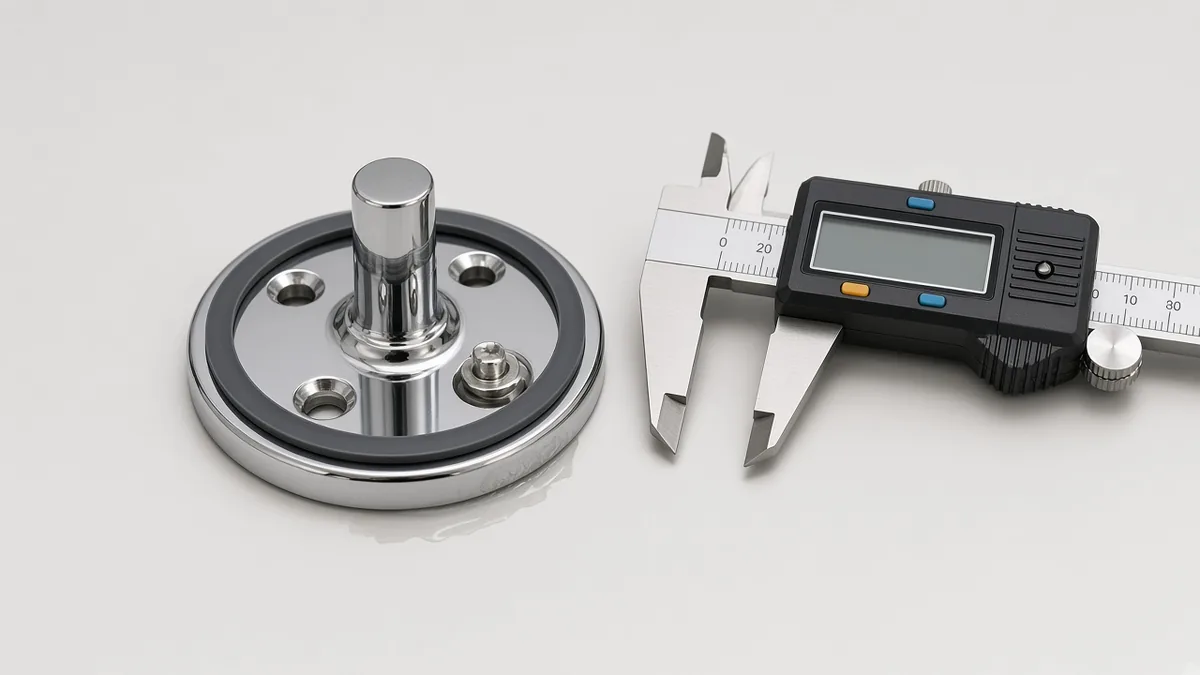
For an exposed head, record whether the head is open, under a snap cap, or under a set screw cover; whether the head is the same finish family as the post; and whether a washer or gasket sits under the head or under the plate. A cap that looks dry on the outside can still hold a film against the head.
For a concealed post, record how the post meets the plate, whether the post interior is finished, whether the plate has a drain path or a closed pocket, and how the fasteners are reached. A beautiful concealed post can be a cup that never dries if splash enters around the plate and cannot leave.
Name the wall condition you are claiming. A tiled wet-zone wall with grout lines is not the same as a painted dry-zone wall. If the listing shows the bar over a bathtub or in a shower, the observation should be a wet-zone observation, or the artwork should carry an exclusion.
Name the fastener as a specified part, not as “screws included.” Record material and finish as the project will ship them, and whether a mixed fastener (for example a different finish in a wet post) is allowed. Do not invent a stainless grade or a coating thickness if the project has not named one.
If a gasket or wall ring is part of the water path, write it into the bill of materials and into the sample. A later page in this batch treats a wall-protection ring as a finish-protection part. This page only cares about that ring when it changes how water sits against fasteners or the plate. Do not borrow a waterproof-seal slogan from either file.
What observation can be agreed without inventing hours?
Agree what you are looking for before anyone talks about rust. Typical project choices are a standing film at an exposed head, a wet pocket under a cap, a damp smear on the wall side of the plate, and staining on an untreated fastener after an agreed wet-and-dry cycle. Pick the sites on the actual sample.
Do not turn that observation into a salt-spray report interpretation hour unless the project has already adopted a named method and a named report scope. Salt-spray methods are methods, not bathroom service years, and they are not automatically a wall-interface water-trap protocol. If a project later uses a named method, record it as project evidence. Do not borrow hours from another SKU.
A practical wet-zone observation can be simpler than a chamber test. The brief can name a splash or wet-cloth condition, a wait, and a visual check at the agreed sites. The condition is a project choice. Do not invent a Koitor cycle count, and do not print a “bathroom-proof” hour that was never written.
Separate cosmetic spotting on the visible finish from corrosion at the fastener or the unfinished interior. A mineral film on chrome is not the same evidence as a stained, wet screw in a closed post. Those two findings should not share one casual rust note, and they should not share one unbounded artwork line.
If the product will ship in both exposed-head and concealed-post versions, observe both, or write an exclusion. A concealed post that stays dry does not clear an exposed-head SKU, and the reverse is also true.
What belongs on the hollow-tube or kit-architecture pages instead?
Sealed versus drainable tube ends belong on the hollow-tube page when the question is water inside a long tube or bar. Kit architecture belongs on the glue-or-screw file when the question is which mounting route is in the assortment. Pipe escutcheon coverage belongs on the pipe page. Cover-flange outside diameter stays on its own leftover file and is not rewritten here.
If a complaint is really a peeling finish, a cleaner stain, or a mineral spot on the visible face, use the finish and cleaner files, not this water-trap page. This page starts where splash can sit against a fastener or an unfinished interior at the wall.
What should the importer freeze before artwork is approved?
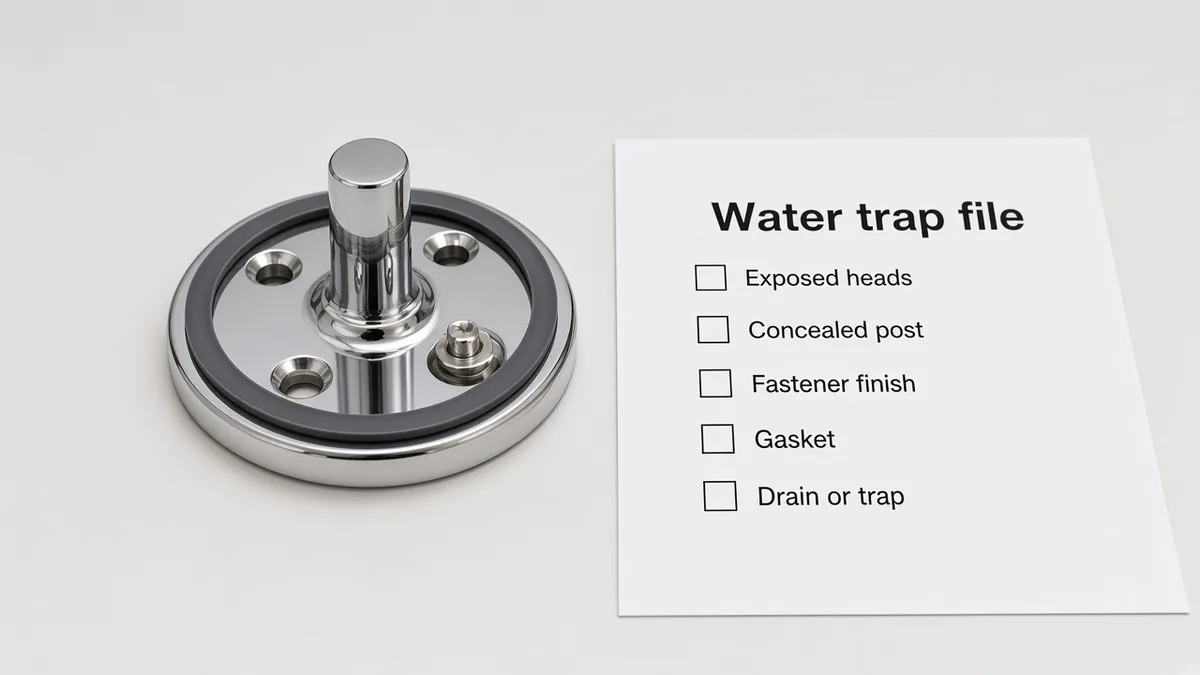
Use a written water-trap file. The checklist and the matrix remind you which decisions to freeze. They do not replace the photographs of the agreed sites or the bill of materials for the fastener and any gasket.
Do not approve an exposed screw bathroom accessories rust line until the path is named for the SKU you will actually ship. A concealed-post photograph cannot support an exposed-head sentence, and a dry-zone install cannot support a shower-wall claim.
If production later changes the cap, the gasket, the fastener finish, or the way the post closes against the plate, the file needs a new observation. A copied rust sentence from a prior lot is not evidence for a changed water path.
A first-article disassembly belongs in the pack when the path is concealed. Photograph the plate on the wall, then open or remove the post the way a later inspector would, and photograph the fastener and the interior. If the SKU cannot be opened without destroying it, write that limitation and agree another way to see the site, or do not print an interior-dry sentence.
Installer substitution is a frequent after-sales leak. A sample built with a finished fastener can be replaced on site with an unfinished screw from a mixed kit. If the listing or the instruction sheet allows a substitute, the water-path file should say so, or the instruction should forbid the substitute. A factory observation cannot cover a fastener the project never shipped.
Capillary films deserve their own note. A tight cap or a flush plate can hold a thin wet layer that never looks like a puddle in a marketing photograph. The observation should include a look under the cap or at the wall-facing plate, not only a glance at the room-facing chrome. If you cannot see the film, you are not yet ready to deny it.
Mixed rooms on the same floor plan are another place claims drift. A tissue holder in a dry powder room is not the same wet-zone path as a towel bar over a bathtub. If the assortment uses one mount family in both rooms, either observe the wetter condition or write a location exclusion. A single rust sentence for every room is how a bounded bath trial becomes a shower-wall return.
After-sales photos should be sorted by site. Rust on the visible bar, staining at an exposed head, and corrosion inside a concealed post are three different records. A generic rust complaint form that never asks which site was wet will push the factory and the buyer into the wrong neighbor page, and it will not improve the next lot.
If a concealed post is allowed to drain, the brief should say where the water is supposed to leave and how that opening is kept during finishing and assembly. A decorative plate that closes the only exit will turn a drain idea into a trap. Do not print that the post “sheds water” unless the exit is on the drawing and on the sample.
An unfinished interior is easy to miss on a plated or coated post. The outside can look correct while the inside of the post or the back of the plate is left bare. If the project will claim that hidden surfaces are finished, the sample cut or the opened post has to show it. If those surfaces are not finished, the artwork should not imply that they are.
Mineral film and fastener corrosion should also stay distinct. A white spot on chrome after splash may be mineral residue that wipes off. A stained, rough fastener or a brown mark inside a closed post is a different finding. Do not let a mineral-spot discussion, or a cleaner discussion, stand in for the water-trap file.
Through-bolts, set screws, and decorative caps create different edges where water can sit. The observation should follow the actual hardware, not a generic “screw-mounted” label. If the assortment uses more than one fastening style, either observe each style or limit the sentence to the style you ran.
Gaskets and caps are only evidence when they arrive in the carton and are used in the install. If a gasket is optional, or if it is easy to omit, the listing should not assume it is present. Put the part on the packing list and in the instruction, or write the observation as a no-gasket path.
A studio wet-cloth check is not automatically equal to a shower-wall install. If the merchandising shows the accessory over a tub or inside a stall, the observation should be at least as wet as that use, or the artwork should carry an exclusion. A lightly misted studio post is a weak basis for a shower-wall rust sentence.
Do not use a packed sample as the only wet-zone proof. A post that was assembled dry on a bench still has to be judged as it will sit on a wall, with the plate against a real surface. A gap that looks open on a table can close against tile and hold water. Record the wall material used in the observation, even if it is only a retained tile or painted panel.
When the path and the sample agree, the listing can stay modest and still be useful: it can name the mount style, name the wet-zone condition you observed, and avoid an unbounded rust slogan. That modest sentence is stronger than a borrowed hour or a copied “rust resistant” badge with no site behind it.
| Claim impulse | What to freeze | What the sample should show | What to keep off artwork until then |
|---|---|---|---|
| Exposed heads will not rust | Head, cap, fastener finish, and a wet-site check | The agreed head site stays within the visual limit after the agreed wet condition | An unbounded rust-proof line for open heads |
| Concealed post stays dry inside | How splash enters, whether it can leave, and interior finish | The interior and fastener are inspected, not assumed dry | A hidden-screw slogan with no interior check |
| Gasket keeps water out | The gasket as a specified part and where it sits | The part is present on the sample, and the path is still judged | A waterproof-seal claim the gasket was never agreed to support |
| Chrome looks fine, so the screw is fine | A split between visible finish and fastener or interior sites | The fastener or interior is looked at, not only the chrome face | A pretty-face photo used as a corrosion pass |
| Salt-spray hours already exist | Whether those hours used this mount path and this report scope | The method matches the claim, if a method is used at all | Borrowed hours from another SKU or another path |
- Write the SKU as a screw-mounted wet-zone accessory post, bar, or hook, not as a pipe escutcheon or a renovation cover flange.
- Name whether the shipper is an exposed-head mount, a concealed post, or both, and photograph the actual water path.
- Put fastener material and finish in the bill of materials, without inventing a grade the project has not named.
- If a cap, washer, or gasket changes the path, specify it and include it on the sample.
- Agree the wet condition, the wait, and the visual sites without inventing a Koitor hour or cycle count.
- Separate visible finish spotting from fastener or interior staining.
- Keep hollow-tube drainage, kit architecture, and pipe-escutcheon coverage on their own pages.
- If only one wall condition was observed, write an exclusion for the conditions you did not run.
- Keep unbounded rust-proof or never-rust language off the listing.
- Send the drawing, the mount sample, and the intended sentence before the artwork is locked.
How can a family-owned OEM review the mount brief?
Koitor can review the post and plate geometry, the fastener and gasket callouts, and the wording you want to use for a named wet-zone path. That is a construction and acceptance discussion, not a corrosion certification. custom bathroom hardware manufacturing is the usual starting point when the post family itself still needs development.
If you already have a wet-zone observation outline, attach it. If you only have a dry studio photograph, say that. We can help you tighten the path and the sentence, but we will not invent an hour to fill a blank. For a mount-file review, send the mount and water-path brief to Koitor with the drawing and the intended claim.
MOQ, sample timing, and bulk lead time stay on the quotation path and depend on the product, the finish, and the order. They are not a substitute for the water-path observation.
Frequently asked questions
Can exposed screw bathroom accessories rust be cleared by a pretty chrome photograph?
No. A dry, well-lit face shot does not show an exposed head under a cap or a fastener inside a concealed post. Photograph the path you are claiming, after the agreed wet condition.
Is a gasket automatically a waterproof seal?
No. A gasket can change where water sits, and it can protect a painted wall or a plate edge. It does not become a waterproof-seal claim unless the project has evidence for that sentence. Write the part first, then write only the observation you have.
How is this different from sealed or drainable tube ends?
Tube-end design is about water inside the length of a hollow bar or post. This page is the wall interface: heads, plates, concealed interiors, and fasteners. A product may need both files. Neither file replaces the other.
Do we need a salt-spray hour to talk about fastener staining?
Not from this article, and not as an invented Koitor figure. You need a named path and an agreed observation. If a later project adopts a named method, record the scope. Do not borrow hours from another accessory.
What if we sell both exposed-head and concealed-post versions?
Observe both, or write an exclusion. The water path is not the same, and a sentence written for one mount should not be copied onto the other by habit.
Can Koitor write the exposed-screw rust sentence for us?
Koitor can review the water-trap wording against the post design and the wet-zone observation, as a construction and acceptance discussion. The buyer still owns the listing. If the trap path was not recorded, the safer path is to narrow or drop the line.
Work With Koitor Hardware
Need a wet-zone mount brief reviewed?
Send Koitor your screw-mounted accessory drawing or sample, the fastener and gasket callouts, and the water-path sentence you want to print. Our team can review post geometry and claim wording as a construction and acceptance brief before quotation. MOQ can start from about 100 pcs depending on the product; samples usually take 5–7 working days after details are confirmed; bulk production usually takes 4–6 weeks depending on the project.
OEM / PRIVATE LABEL
Turn this sourcing guide into a product brief
Share your target product, size, finish, order quantity and packaging requirements. Your team receives a practical manufacturability review before quotation.


 English
 Español
 Português
 Français
 Deutsch
 العربية