

Covering an old hole is not the same as protecting the paint under a plate, and it does not settle bathroom hardware wall gasket as a specified part. A thin ring or gasket at the mounting plate can be a sacrificial or sealing interface that protects a finished wall, or that changes how splash sits at the plate edge. Freeze the ring in the bill of materials, and do not treat it as a renovation cover flange or as a waterproof-seal slogan.
This guide is for importers and private-label teams writing screw-mounted towel bars, robe hooks, tissue holders, and similar posts on painted or finished walls. It is not a leftover cover-flange outside-diameter file, not a pipe-escutcheon coverage page, not a glue-or-screw kit page, and not the wet-zone fastener water-trap page. The decision is whether a wall-protection ring is a required, specified part at the plate.
Koitor is a family-owned custom metal hardware factory. We can review the plate, the ring, the coverage, and the wording you want to print. We do not invent a gasket SKU, a waterproof-seal promise, or a thickness that the project has not agreed.
Why cover-flange diameter and water-trap files do not close a wall ring
A renovation cover flange is about outside diameter large enough to hide an old hole. That leftover file is not reopened here. A large flange can cover a hole and still leave a sharp plate edge on fresh paint, or still omit the thin ring this page is about. Hole coverage and finish protection are different parts.
pipe escutcheon bore and wall-hole coverage is a pipe collar: pipe size, bore, and wall-hole coverage around a pipe. A towel-bar or robe-hook plate is not a pipe escutcheon. Use the pipe page for pipes. Use this page for the accessory plate ring.
A wet-zone water-trap file asks whether splash sits against fasteners or unfinished interiors. This page may mention splash at the plate, but only as it relates to the ring as a specified wall-protection part. Do not merge the two decisions. A ring can protect paint and still leave a fastener path that belongs on the trap file.
rubber compression set for mounting pads is useful when the question is a rubber compound under compression, often on feet or pads. A wall ring may use a similar family of materials, but the job here is coverage and protection at a plate edge, not a foot-pad compression set. Do not borrow a pad-test sentence and print it as a wall-gasket claim.
Kit architecture — glue or screw — tells you the mounting route. It does not tell you whether a protection ring ships with the screw-mounted plate. Put the ring in the bill of materials, or write that it is omitted.
When is the ring required in the bill of materials?
Name the wall you are claiming to protect. A painted door or a painted bathroom wall is a different risk than a fully tiled wall with the plate sitting only on glaze. If the merchandising shows a painted wall, the ring is often the part that stands between the plate edge and the finish. Write the condition you observed.
Name the ring as a part: it is in the kit, or it is not. “May include a gasket” is not a specification. If installers can omit it, the protection claim cannot assume it is present. Put it on the packing list and in the instruction, or write the observation as a no-ring path.
Name what the ring is for in this project: protecting paint or tile from the plate edge, improving the sit of the plate, changing splash at the edge, or more than one of those. Do not upgrade a paint-protection ring into a waterproof-seal claim.
If the assortment uses more than one plate diameter, say whether each plate has a matching ring. A ring that peeks out unevenly, or that falls inside the plate edge, is a coverage miss even if some ring is in the box.
Color and finish of the ring should be written if they are visible. A contrasting ring can be a design choice or a complaint. If the ring is meant to disappear, say the color family and check it on the sample against the plate and the wall.
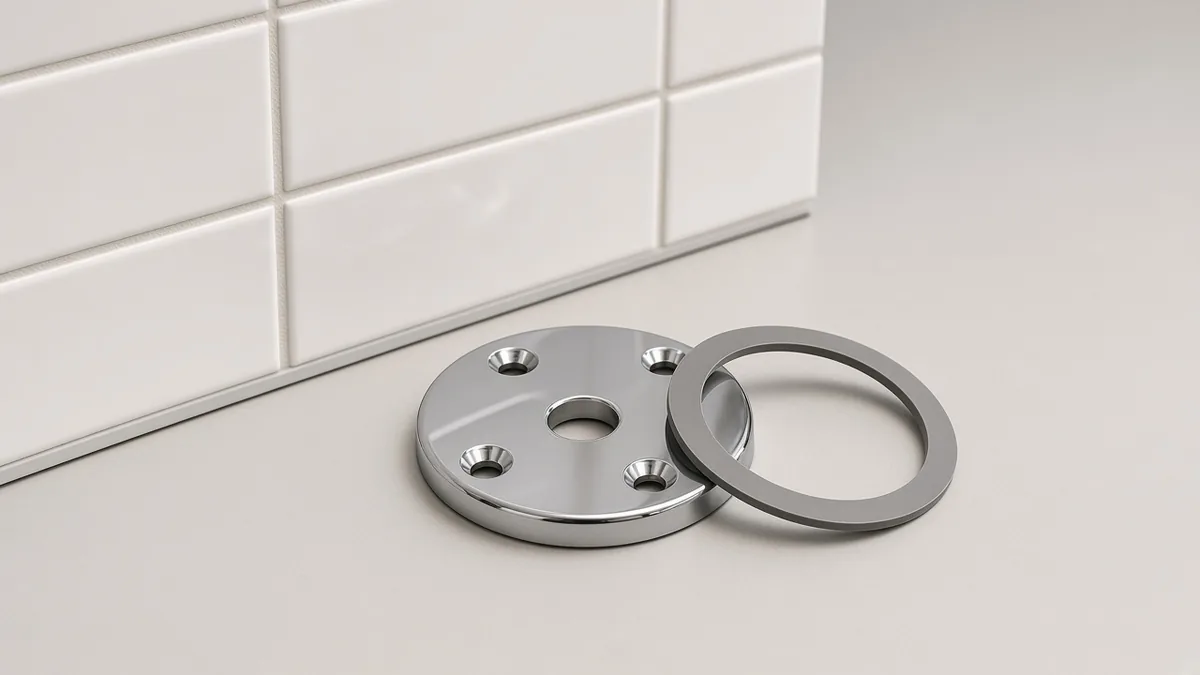
What material, thickness, and coverage rules should be frozen?
Name the material family as the project will ship it, without inventing a grade. If the buyer wants a stated polymer or rubber family, write it after the part is agreed. Thickness is a project figure measured on the sample, not a Koitor standard I can invent.
Coverage should be judged with the plate on a representative wall or panel. The ring should do the job you named: it should sit under the plate edge, or peek out as a designed halo, according to the brief. A ring that wrinkles, splits, or leaves a gap at the edge is not a pass just because it was in the carton.
Compression matters, but this is not a foot-pad page. If the ring is crushed to nothing, or if it holds the plate off the wall so far that the mount looks loose, record that. Write the acceptable sit on the sample, without borrowing a compression-set hour.
If the plate has a recessed back that captures the ring, write that geometry. A captured ring and a loose slip-on ring have different packing and install risks. The brief should match the part that will ship.
What must not be claimed as a waterproof seal?
Do not print that the ring waterproofs the wall, seals the bathroom, or makes the mount leak-proof. Those lines turn a protection part into a building-seal rating the factory did not issue. Safer language names the ring, the wall condition, and the protection or sit you actually observed.
Do not borrow a plumbing-escutcheon or a shower-waterproofing sentence. This is an accessory plate ring, not a wet-room membrane.
After-sales photos should show the plate, the ring, and the wall finish. A rusted fastener inside the post is a different file. A chipped paint ring around a plate with no gasket in the photo is a reason to ask whether the part was omitted.
What should the importer freeze before artwork is approved?
Use a written wall-ring file. The checklist and the matrix remind you which decisions to freeze. They do not replace the part in the bill of materials or the coverage photographs.
Do not approve a bathroom hardware wall gasket line until the ring is named as a required or omitted part for the SKU you will ship, and until coverage is judged on a representative wall or panel.
If production later changes plate diameter, ring thickness, color, or capture geometry, the file needs a new observation. A copied protection sentence from a prior plate is not evidence for a new pair.
A first-article pack should include the ring part, the packing location, the install instruction, and photographs of the plate on the named wall with the ring in place and, if useful, with the ring omitted so the edge condition is clear.
Instructions should show the ring, not hide it. If the user is never told to install it, do not assume they will. A factory-fitted sample is a weak basis for a kit that arrives loose.
Painted-wall merchandising should use a painted-wall sample. A fully tiled studio wall can hide the very edge damage the ring is meant to prevent.
Tile-only SKUs can still use a ring, but the brief should say why: sit, splash, or a mixed painted-and-tiled story. Do not print a paint-protection line on a tile-only photograph unless that is also the claimed wall.
After-sales returns should be sorted into omitted rings, wrong-size rings, stained or split rings, and paint damage at the plate edge. Mixing them into one “gasket” bucket will not improve the next lot.
A finish-only change to the plate can often keep the prior ring record if the diameter, back recess, and ring part did not change. Confirm those functional parts first.
Do not reopen cover-flange outside diameter in this file, and do not invent a cover-flange URL. If the buyer also needs old-hole coverage, that is a different leftover decision and should be written separately.
When the part, the coverage, and the wall condition agree, the listing can stay modest and still be useful. Name the ring and the protection you observed, and leave waterproof-seal language off the page.
Send the drawing, the ring part, and the intended sentence before the artwork is locked. A factory can quote the accessory while the wall observation is still being written, but a protection headline should wait for the specified part.
Warehouse packing should keep the ring with the plate it matches. A loose bag of mixed diameters is how a small ring arrives under a large plate and leaves the edge unprotected.
If the kit also includes decorative caps or screw covers, keep those parts on their own retention file unless they change how the ring sits. A cap can hide a screw and still leave the plate edge bare.
Installer adhesive used in place of the ring is a substitution. If the instruction allows it, the protection file should say so, or the instruction should forbid the substitute. A factory ring observation cannot cover an on-site caulk the project never specified.
Uneven walls deserve an exclusion when the sample was a flat panel. A ring that covers evenly on a flat painted board can wrinkle over a heavy texture or a grout line. If textured walls are in the market and were not on the bench, say so, rather than printing a universal paint-protection line.
Humidity and cleaner splash can stain a light-colored ring even when the wall finish stays intact. If the merchandising shows a pale ring on a wet-zone plate, include staining in the observation or write that the ring is a wear part. A perfectly clean studio ring is a weak basis for a year-round appearance promise.
Double-sided tape sometimes ships with no-drill kits and can be confused with this ring. Keep adhesive-mount kits on their own architecture file. This page is the ring under a screw-mounted plate. A tape pad is not a substitute part unless the brief says it is.
First-article photographs should include the loose ring, the back of the plate, and the installed halo or hidden sit. A single front view of the plate will not show whether the ring is captured, wrinkled, or missing at the bottom edge where water may run.
If the plate is sold in several finishes, check whether one ring color is meant to serve all of them. A ring that disappears on chrome may contrast on matte black. Either supply matched rings or write the visible-halo condition honestly.
Split or cracked rings in incoming inspection are a packing and material issue, not a coverage theory issue. Record them separately. A cracked ring that still “mostly” covers is not a pass if the brief required a continuous edge.
After-sales paint chips should be compared to the install date and to whether the ring was present. A chip under a plate with no ring in the photo is a different record from a chip that appeared after a ring hardened or stained. Ask for the part before you change the specification.
When the part, the wall condition, and the coverage photographs agree, the listing can stay modest and still be useful. Name the ring and the protection you observed, and leave waterproof-seal language off the page until a much stronger file exists.
A later cosmetic change to plate finish can often keep the prior ring geometry record if diameter, recess, and the ring part are unchanged. Confirm those functional parts first, then keep or retire the sentence. Keep the protection headline tied to the kit you will actually ship.
If the buyer also wants a fastener-corrosion sentence, keep that on the water-trap file and only cross-check whether the ring changes the path to the screw. A ring that protects paint does not automatically dry an untreated fastener, and a dry fastener does not automatically protect paint at the plate edge.
Send the pack with the drawing before the listing is locked. A factory can quote the accessory while the wall observation is still being written, but a protection sentence should wait until the ring is in the bill of materials and the coverage photographs exist on the named wall condition.
If a later review finds only a carton or label change, the prior ring record can stay, provided the plate, the ring part, and the instruction still show the same install. Confirm those items first. A new carton photograph is not, by itself, a new protection claim, and it should not be used to retire or invent a sentence.

| Claim impulse | What to freeze | What the sample should show | What to keep off artwork until then |
|---|---|---|---|
| Protects the painted wall | Ring as a required part, wall condition, and coverage on the plate | The ring is present and does the named protection job on the sample | A paint-protection line when the ring is optional or omitted |
| Looks like a finished halo | Color, peek-out, and plate-to-ring match | The visible ring matches the brief, without a wrinkle or gap the brief forbids | A disappearing-ring sentence on a contrasting or uneven part |
| Seals the mount against water | What the ring is actually for, and any splash observation at the edge | A modest sit or splash note, if you have one | A waterproof-seal or leak-proof slogan |
| Covers old holes too | A split between this ring and leftover cover-flange diameter | The ring job is judged as protection or sit, not as old-hole coverage | A renovation-flange claim written onto a thin protection ring |
| Same ring for every plate | Matching rings for each plate diameter in the assortment | Each plate has a ring that covers as claimed | A mixed-bag ring assumed to fit every plate |
- Write the part as a wall-protection ring or gasket at an accessory mounting plate, not as a pipe escutcheon or a renovation cover flange.
- Put the ring in the bill of materials as required or omitted, and show it in the instruction.
- Name the wall condition you are claiming to protect or sit against.
- Name material family and thickness only as project-agreed figures, without inventing a grade.
- Judge coverage with the plate on a representative wall or panel.
- Keep wet-zone fastener traps, pipe escutcheons, and leftover flange diameter on their own files.
- Match rings to plate diameters in the assortment.
- If painted-wall and tile-only stories are both sold, observe both or write an exclusion.
- Keep waterproof-seal language off the listing.
- Send the drawing, the ring, and the intended sentence before the artwork is locked.
How can a family-owned OEM review the part brief?
Koitor can review the plate and ring geometry, the packing and instruction, and the wording you want to use. That is a construction and acceptance discussion, not a waterproofing certification. تصنيع تجهيزات الحمامات حسب الطلب is the usual starting point when the accessory family itself still needs development.
If you already have a ring part and a wall-condition outline, attach them. If you only have a plate photograph with no ring, say that. We can help you tighten the part callout and the sentence, but we will not invent a seal rating to fill a blank. For a wall-ring review, send the wall-ring brief to Koitor with the drawing and the intended claim.
MOQ, sample timing, and bulk lead time stay on the quotation path and depend on the product, the finish, and the order. They are not a substitute for the specified ring.
الأسئلة الشائعة
Can bathroom hardware wall gasket be cleared by a large cover flange?
No. A large flange may hide an old hole and still omit the thin protection ring at the plate edge. Keep leftover flange diameter on its own file, and judge this ring as the part it is.
Is the ring automatically a waterproof seal?
No. A ring can protect paint or change how the plate sits. It does not become a waterproof-seal claim unless the project has evidence for that sentence. Write the part first, then write only the observation you have.
How is this different from a pipe escutcheon?
A pipe escutcheon is sized to a pipe and to a wall hole around that pipe. This page is a protection or sit ring at a screw-mounted accessory plate. They can look like cousins in a photograph and still be different parts.
What if the kit makes the ring optional?
Then a protection sentence cannot assume it is installed. Either make the ring required and show it in the instruction, or write the observation as a no-ring path.
Do we need a rubber test method to specify the ring?
Not from this article, and not as an invented Koitor figure. You need the part in the bill of materials and a coverage check on a representative wall. If a later project adopts a named material method, record it as project evidence.
Can Koitor write the wall-gasket sentence for us?
Koitor can review a protection-ring sentence against the plate gasket and the finish-contact photographs, as a construction and acceptance discussion. The buyer still owns the listing. If the gasket geometry was not frozen, the safer path is to narrow or drop the line.
اعمل مع شركة «كويتور» للأدوات
Need a wall-ring brief reviewed?
Send Koitor your screw-mounted accessory drawing or sample, the wall-ring part, and the protection sentence you want to print. Our team can review plate coverage and claim wording as a construction and acceptance brief before quotation. MOQ can start from about 100 pcs depending on the product; samples usually take 5–7 working days after details are confirmed; bulk production usually takes 4–6 weeks depending on the project.
OEM / العلامة التجارية الخاصة
حوّل دليل التوريد هذا إلى موجز منتج
يرجى إطلاعنا على المنتج المستهدف، والحجم، والتشطيب، وكمية الطلب، ومتطلبات التغليف. وسيتلقى فريقك تقييمًا عمليًّا لإمكانية التصنيع قبل تقديم عرض الأسعار.
 English
 Español
 Português
 Français
 Deutsch
 العربية