

For a Japan packaging recycling law importer review, start by identifying the Japanese business that imports and sells the hardware, then classify each packaging component by material, use, domestic sales channel and likely disposal route. Japan’s Containers and Packaging Recycling Act recycling obligations and packaging identification-mark rules are related but separate checks. Ask the overseas supplier for revision-controlled component and weight data; the Japanese importer or its adviser must decide which duties apply, who is responsible for a mark, and what filings or fees are required. This guide is a practical preparation checklist, not a legal determination for a particular importer or product.
What does Japan’s packaging recycling law regulate?
Japan’s Containers and Packaging Recycling Act addresses certain containers and wrapping used with merchandise, rather than the metal bathroom accessory itself. Japan’s Ministry of the Environment describes a container as something that holds a product and packaging as something that wraps it; the item must normally become unnecessary when the product is consumed or separated from it. Household disposal and specified material categories also matter. A plain product photograph or the word “packaging” on an invoice cannot establish whether a particular component is covered.
For a bathroom wire basket, the finished basket is the merchandise. Depending on the product configuration, separate packaging components may include a protective sleeve, a small hardware bag, an insert, a retail box, an outer mail-order box, or transport protection. These components can have different materials and functions. The buyer should record them separately rather than treating a shipment as one undifferentiated “carton.”
The practical boundary is the packaging around the product sold into Japan and the route by which that packaging is used and discarded. Japan’s official guidance illustrates that packages used to send mail-order merchandise can be treated differently from containers used only to provide a transport service. That distinction does not let a buyer label every export carton “out of scope.” The package’s role in the sale, whether it reaches a household, what it contains and how it is separated or discarded all need to be described accurately before the Japanese compliance owner classifies it.
JCPRA’s examples identify relevant material groups, including glass, specified PET bottles, paper containers and packaging, and plastic containers and packaging. The categories contain exclusions and conditions. For example, JCPRA distinguishes corrugated-board containers from other paper packaging in its recycling-obligation illustrations; beverage containers also have specific rules. A paper insert, a corrugated master carton and a printed paper product box are not automatically the same legal category just because all look like paper.
The same care applies to plastics. A clear polybag, a foam protector, a plastic label and a mixed-material pouch may differ in composition and function. A surface appearance is not a reliable material declaration. Ask the supplier to identify the material using its controlled packaging specification or material declaration, and flag laminates, coatings, adhesives, mixed components or unknown resin rather than guessing.
This component-level approach helps buyers avoid two opposite errors: assuming that all material used to ship a product is regulated in the same way, or assuming that a hardware product’s packaging is irrelevant because the product is made of metal. Use the current JCPRA illustrated container-and-packaging guidance y el Ministry of the Environment overview as starting points, then ask the Japan-side adviser to apply the official definitions to the actual pack-out.
Which packaging components should an importer classify?
Build a packaging map for each Japan-market SKU and revision. Start at the hardware item and move outward, recording every component that is supplied with it or added later by a distributor, retailer, fulfillment center or e-commerce operation. Keep packaging used only for international freight visible in the map, but do not decide its legal status solely from the name “shipping packaging.”
| Component or layer | Supplier or buyer should record | Why it needs a separate review |
|---|---|---|
| Product-contact sleeve or bag | Material, composition, thickness if specified, weight per unit, and whether it stays with the retail product | A thin bag may be a separate package from the retail box and may carry different material information |
| Screw, anchor or accessory pouch | Whether it is included in the sale, material, unit weight and attachment or pack-out method | A small component can be easy to omit from a total package-weight estimate |
| Divider, tray, pad or protective insert | Material and function; whether it is packaging or a component intended to remain with the product | A cushion or support should not be classified by appearance alone |
| Retail or product box | Board or plastic specification, coatings/laminates, product information and package weight | This may be the package presented with the merchandise to the buyer or consumer |
| E-commerce parcel or shipper | Who adds it, which sale or delivery it supports, material, weight and domestic end-user route | A package used to deliver merchandise is not necessarily equivalent to a carrier’s transport-service container |
| Pallet, stretch film or export protection | Who owns or removes it, where it is opened and discarded, material and actual distribution path | The fact that packaging crosses a border does not by itself decide whether the Japanese rule covers it |
The table is a data-gathering aid, not a legal scope ruling. For example, the factory may add a master carton for transport, the Japanese importer may add a retail label, and an online seller may add a final delivery box. Each layer can have a different decision-maker and waste route. Record the actual process rather than relying on an old standard pack-out image.
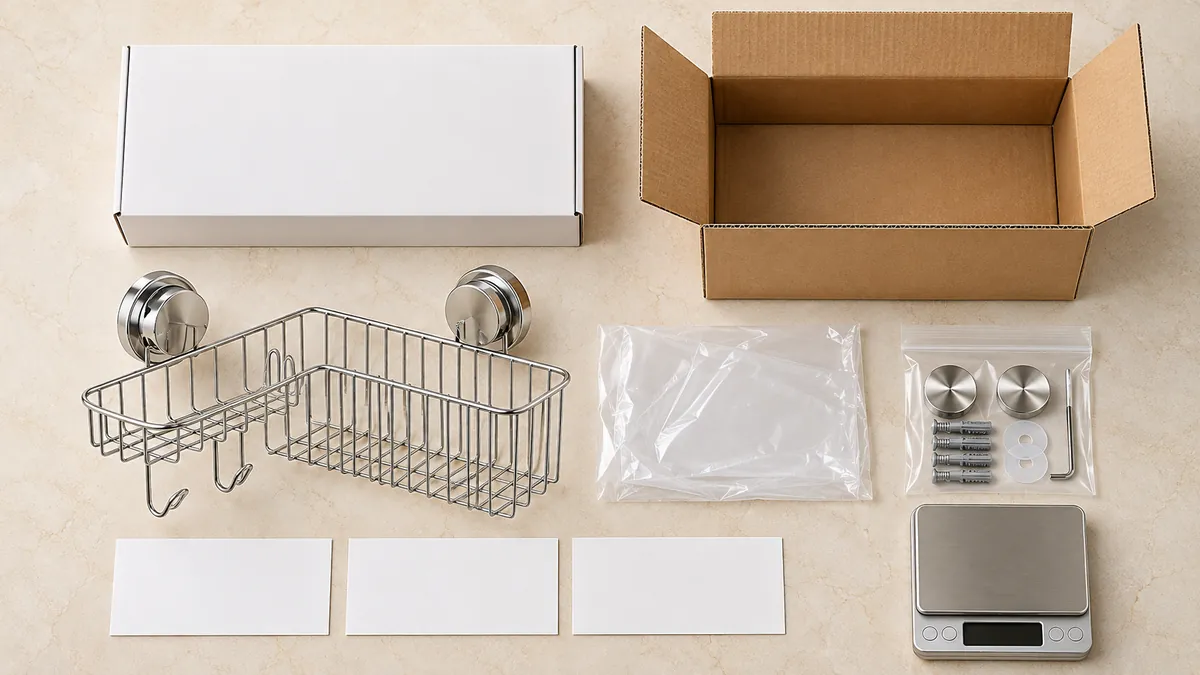
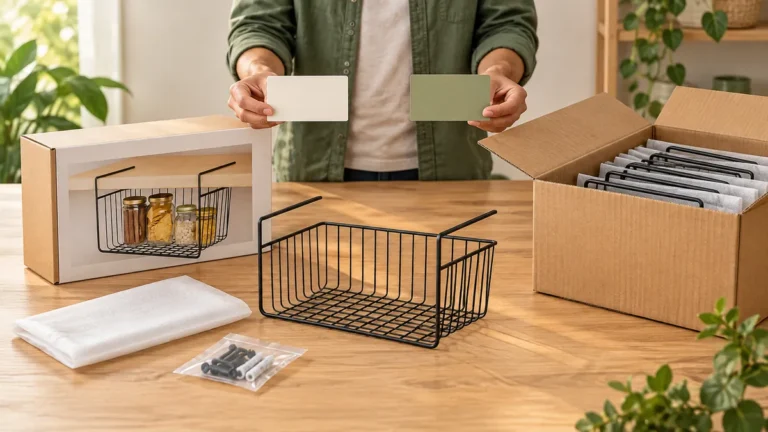
If a product has alternate packaging for different retailers, marketplace fulfillment or private-label programs, do not average the configurations into one specification unless the importer has a defensible method and the applicable official rules permit it. Keep a separate component list for each materially different market pack. This lets a buyer trace which packaging version was used for a given purchase order and which version the compliance review assessed.
The Japanese importer should also identify whether packaging is consumed or separated by household users, used only within a business, or handled in another way. The answer can affect the assessment. A product that could be installed in a home does not automatically prove that every shipping component is household packaging; equally, an import shipment’s initial use in a warehouse does not necessarily prove that the product packaging will never reach a household. Describe the distribution path and ask the adviser to decide.
Who may have recycling obligations?
JCPRA’s current guidance groups relevant specified business entities by activities such as using containers or wrapping to sell products, manufacturing containers, and importing containers or products with containers or wrapping. The Ministry of the Environment describes a system in which consumers sort household packaging, municipalities collect it, and businesses carry out recycling responsibilities for qualifying packaging they use, manufacture or import. An importer should therefore begin with its own Japanese legal entity and business activity, not with the overseas factory’s address.
A foreign OEM factory can provide facts about what it puts into a carton. That does not, by itself, establish which Japanese company is a specified business entity or make the factory responsible for the importer’s filing. A Japanese importer, brand owner, wholesaler or retailer may have one or more relevant roles depending on how the goods and packaging move through the business. The contract can allocate who supplies data, approves packaging or pays a charge between commercial parties, but a private agreement is not a substitute for determining the statutory role.
JCPRA also describes a small-business exclusion for certain recycling obligations. Its decision materials distinguish the main business category and use different sales and employee thresholds. The current English process page lists, among other categories, manufacturing and related businesses at annual net sales of ¥240 million or less and 20 or fewer employees, and commercial/service businesses at ¥70 million or less and 5 or fewer employees. The detailed Japanese guidance asks the user to assess business activity, the business with the highest sales, enterprise-wide employee counts and annual sales. Treat the figures as category-specific paired tests, not a universal “small importer” rule.
For example, an importer’s business may involve both wholesale distribution and a branded product program. The buyer should not select whichever category produces a preferred result. Review the principal business category under current JCPRA guidance, consolidate employees as directed, confirm the applicable sales measure and use current official instructions or qualified Japanese advice. Where the numbers are near a threshold, the company has multiple business lines, or an entity imports both products and empty packaging, document the facts before deciding.
A practical role review should answer these questions:
- Which Japanese legal entity is named as importer and sells or otherwise uses the packaged goods?
- Does that entity import empty containers, finished products with packaging, or both?
- Which divisions use, manufacture, add, remove or specify packaging?
- Which business activity is the entity’s main activity under JCPRA’s current classification guidance?
- What are the current company-wide employee and sales figures, and what period does the guidance use?
- Are relevant packaging materials used with merchandise that ultimately becomes household waste in Japan?
- Is any small-business exclusion being considered, and does it apply to this specific recycling obligation?
El JCPRA specified-business checklist and its recycling process in English are useful starting references. A buyer should retain the evidence behind the answers, because a single annual sales figure, employee count or supplier invoice will not resolve every scope question.
JCPRA’s recordkeeping guidance says that specified businesses must keep a ledger concerning quantities of packaging used with products sold or containers manufactured/imported, and describes a five-year retention period. The required record and calculation depend on the business category and activity. The supplier’s package-component schedule is one input; the Japanese company still needs its sales, import or usage records and should confirm the applicable ledger fields and retention rule in current official guidance.
How are recycling duties different from packaging identification marks?
A recycling obligation and an identification mark solve different problems. Recycling rules allocate responsibilities for covered packaging waste, while material identification marks help consumers sort certain packaging under Japanese recycling and resource-utilization rules. They may concern some of the same physical packages, but one conclusion does not automatically answer the other.
JCPRA explains that identification-mark duties can apply to users of containers or wrapping, container manufacturers and importers selling products with packaging. Its guidance also states that small businesses can still have identification-mark duties even when small-business status excludes them from a recycling obligation. Therefore, “we are small” is not a complete answer to whether a Japanese mark is needed.
Imported goods require their own review. METI’s import guidance states that when the importing and selling business instructs on packaging material, structure or the use of its trademark, the identification-mark rules can apply in the same manner as for domestic products. METI also describes cases where an importer that did not give those instructions may still have marking responsibilities when Japanese-language labeling appears on the packaging. The precise result depends on the facts and applicable exceptions. Have the Japanese responsible party review METI’s current identification-mark FAQ and the relevant e-Gov identification-mark order.
A foreign recycling symbol should not be assumed to replace a Japanese identification mark. Likewise, a Japanese-language instruction sheet packed with the product is not automatically a place to put a mark that belongs on packaging. Ask the compliance owner to identify the packaging component, the required mark if any, its location and the party responsible for applying it. Do not add a mark simply because a package contains plastic; do not omit one solely because a factory has never used it for another market.
The buyer’s specification should separate at least four questions:
- Is this physical component a container or wrapping within the relevant Japanese identification-mark rule?
- Is the package material in a category that requires identification marking?
- Who gave directions about its material, construction or trademark, or who added Japanese-language labeling?
- Is the particular imported-product or package configuration covered by an official exception or alternative display method?
These questions are distinct from whether the company has recycling obligations, what packaging weights are reportable, and whether a small-business exclusion applies. Keep separate sign-off fields for “recycling scope and entity,” “material/quantity records,” and “identification mark and responsible party.” That separation reduces the risk that an answer to one checkbox is mistakenly copied across every legal task.
This is a place where the buyer should use official advice rather than ask a manufacturer to make a legal conclusion. The supplier can confirm that a polybag is polyethylene, give the bag’s weight and show where a label is applied. The Japanese importer or adviser should decide whether a particular Japanese mark is required and approve final artwork before production.
What supplier data should a Japan importer request?
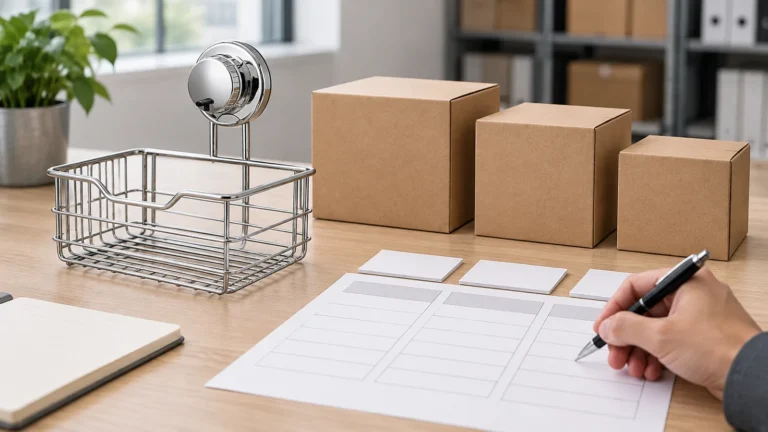
Request a controlled packaging data file that describes the exact product version and Japan-market pack-out. A supplier should provide verifiable physical facts, not an unsupported legal conclusion such as “compliant in Japan.” Keep one row for each separable packaging component, and link each row to a SKU, package level, revision and effective date. A Japan packaging recycling law importer checklist becomes actionable when every package component maps to a specific SKU, revision and Japanese sales channel; the importer can then compare supplier facts with its own records.
A useful supplier schedule can include:
| Data field | What to request | How the importer can use it |
|---|---|---|
| Product identity | SKU, model, drawing or sample revision, customer brand and Japan-market variant | Connects the package record to the product actually imported |
| Component identity | One line for each bag, sleeve, box, insert, divider, tape, label and outer case | Prevents a small or hidden layer from disappearing into a single package total |
| Function and level | Product-contact protection, accessory containment, retail pack, e-commerce delivery or transport pack | Gives the reviewer context for the component’s role |
| Material | Specific paper/board grade, resin or metal where known; coating, laminate or mixed-material details | Supports material classification without guessing from color or appearance |
| Unit weight | Weight per component and per finished product pack; sample count and weighing method for small parts | Allows the importer to reconcile packaging quantities and check totals |
| Pack configuration | Number of products per inner box, master carton, and any retailer-specific assembly | Makes the recorded package match the purchase order and sales channel |
| Market destination | Japan retail, Japanese e-commerce, distributor bulk delivery or another route | Separates materially different distribution and disposal scenarios |
| Artwork and marking | Artwork revision, language, location, symbol supplier applied, and party that requested it | Creates a review trail without asking the factory to decide legal responsibility |
| Control de cambios | Revision number, approval date, effective lot/date and notification requirement | Allows the buyer to identify when a material or packaging change affects the assessment |
| Evidence | Dated photos, cut sheet or material declaration, and a representative packed sample when available | Lets the buyer compare the documents with the actual pre-production pack |
The list is a practical handoff format, not a claim that Japanese law requires every listed supplier field. JCPRA’s company records and calculations remain the Japanese entity’s responsibility. A supplier can normally describe its own packaging and production revision; it cannot supply the importer’s annual sales, determine its principal business category or know how a retailer will repack the item in Japan.
Ask for mass units and calculation methods that can be reconciled. If a small screw pouch weighs too little for a stable single reading, the supplier can weigh a known sample quantity and report the count, total weight and calculated unit basis. Keep the original reading rather than only a rounded total. For a mixed-material part, record the known layers and uncertainty; do not silently count the whole part as the dominant visible resin.
At approval, compare the data sheet with a physical pack-out sample or dated photographs. Confirm that every listed layer is present, the labels match the approved artwork, and the supplier has not substituted a different bag, foam or carton. When the buyer changes from a plastic sleeve to paper, changes box dimensions, adds a brand label or switches to a marketplace-ready pack, update the data revision and ask the Japanese reviewer whether the prior scope or marking decision needs to be revisited.

A buyer can also compare this country-specific work with an existing multi-country packaging EPR market-entry checklist or the Italy CONAI packaging data checklist. Those articles offer transferable ways to organize supplier information, but their legal thresholds, registrations, marks, fees or producer definitions must not be carried over to Japan.
What should buyers confirm at each purchasing stage?
A staged check is easier to manage than a one-time request sent after mass production has started. Assign one Japanese compliance owner and tie each approval to a purchase order, product revision and packaging revision.
Before quotation: Tell the factory the intended Japanese sales channel and request a current package map. If the buyer expects retail-ready or private-label packaging, share the dimensions, material targets, artwork requirements and language plan. Ask the supplier to identify any packaging component it cannot specify confidently. Avoid asking for a “Japan compliant” price before the buyer has defined what pack-out and marking instructions are actually required.
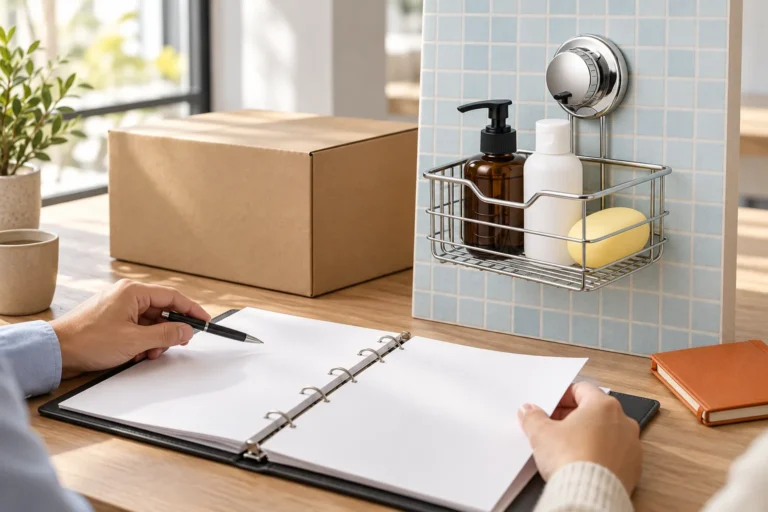
Before sample approval: Compare the sample against the package schedule, including small accessory bags and inserts. Record each component’s declared material and weight. If a Japanese mark is planned, let the responsible importer or adviser approve the final artwork and identify which component carries it. Save the exact artwork file and sample photo with the revision.
Antes de la producción en serie: Confirm that the approved packaging version matches the purchase order and first production sample. Specify who may approve substitutions, what change notice is required, and whether unapproved substitutions are grounds to stop shipment. A substitution from a paper insert to foam, a new protective film or a different printed label can affect material records or marking review even if the hardware dimensions do not change.
Before import or annual reporting: Reconcile supplier facts against the actual imported quantities and the Japanese entity’s sales or usage records. Separate product variants and packaging revisions when they materially differ. Ask the company’s compliance or accounting owner to verify the current JCPRA process, any applicable filing route, fee calculation, deadlines and record retention. Do not use an old fee schedule or a factory’s per-carton estimate as a substitute for the importer calculation.
After a packaging change: Open a change record containing the old and new component, reason, supplier evidence, affected SKU/lot, effective date and reviewer decision. Update the package data file, buyer artwork and any applicable annual records. If a change affects who specified a material or trademark, route it back through the identification-mark review.
A short approval matrix helps keep ownership clear:
| Decision | Responsible owner to assign | Evidence to retain |
|---|---|---|
| Japanese entity and business-category review | Importer legal, compliance or tax adviser | Entity details, principal business, current employee and sales data |
| Component material and physical weight | Supplier, verified by buyer as needed | Dated component schedule, declarations, photos and sample readings |
| Recycling scope, registration, records and fees | Japanese importer/compliance owner | Current official guidance, rationale, required records and submitted documents |
| Identification-mark responsibility and artwork | Japanese importer or designated labeling owner | METI guidance review, approved artwork and the package revision |
| Pack-out and production change approval | Buyer and supplier project owners | PO specification, approved sample and change-control record |
This division does not dictate the legal party in every transaction. It makes clear who is responsible for each fact and decision so that a supplier-data request does not accidentally become a legal delegation.
What mistakes create avoidable packaging-compliance gaps?
The most common process failures are not solved by adding more words to a purchase order. They are caused by incomplete package data, unclear ownership or applying another country’s rules to Japan.
- Treating all package weight as one material. A carton, foam insert, accessory pouch and protective film may have different materials and roles. A single gross weight does not tell an importer what its reviewer needs to classify.
- Assuming every cardboard box is automatically exempt. JCPRA’s recycling illustrations distinguish corrugated board from other paper packaging, while identification marking has its own scope. Confirm what the component actually is and which rule is being reviewed.
- Assuming a small-business exception covers every packaging rule. JCPRA distinguishes the recycling-obligation exclusion from identification-mark requirements. Check both regimes.
- Assuming the foreign factory is the legal filer. A factory may provide weight and material facts; the Japanese entity’s own activities and scale determine its responsibilities.
- Using a generic export pack as the Japan-market specification. Retail, distributor, and e-commerce configurations may add different boxes, labels and protective parts.
- Keeping a sample but not its revision. If packaging changes after the sample is approved, the sample no longer describes the shipment. Link images and data to the order and effective date.
- Using a foreign recycling logo as proof of Japanese marking compliance. The Japanese importer should check the relevant domestic identification mark and package-specific responsibility under current official guidance.
- Requesting a legal certificate from a supplier that has no importer data. A supplier cannot know the Japanese buyer’s employee count, sales, annual packaging usage or downstream repacking process.
A clean component schedule will not guarantee that the importer has met every obligation. It makes the underlying facts visible, supports consistent decisions and helps the buyer find the missing data before goods are packed.
How can a hardware supplier support the buyer’s review?
A specialized OEM manufacturer can contribute packaging facts within its control: the bill of packaging components, known materials, measured unit weights, pack-out photographs, artwork placement and change notifications. A supplier can also review whether a proposed sleeve, insert or carton is practical for protecting a wire basket and its mounting parts during handling. Those manufacturing inputs help the buyer compare packaging revisions and avoid accidental substitutions.
Koitor Hardware is a family-owned factory and custom metal hardware manufacturer focused on bathroom and home-storage hardware. For a product-specific review, a buyer can share the drawing or physical sample, Japan-market pack-out, packaging revision, target sales channel and approved labeling instructions. The product page for Fabricación a medida de cestas metálicas de almacenamiento provides a relevant starting point for discussing a basket program. Product fit, packaging data and Japan-side legal classification should remain separate records.
When a supplier cannot confirm an exact packaging resin, coating or component weight, the useful answer is to flag the unknown and agree on how to verify it. The buyer may request a material declaration, representative sample, validated weighing method or packaging-engineering review. Do not accept an unsupported “eco,” “recyclable” or “Japan compliant” label as a substitute for the underlying specification.
The factory should receive approved artwork and a clear version number before applying any buyer-requested Japanese marks or labels. The importer should confirm that the artwork is legally appropriate and that the chosen component is allowed to carry the mark. The supplier’s approval acknowledgment should confirm the file revision and application location, not certify that the importer’s total reporting duties have been completed.
Japan packaging recycling law importer checklist before a purchase order
Use this checklist to prepare the buyer-side review before a Japan-bound hardware order:
- Identify the Japanese legal entity that imports, sells or otherwise uses the packaged hardware.
- Record the principal business category and check current JCPRA sales and employee criteria, including whether a recycling-obligation exclusion may apply.
- Inventory each packaging component by SKU, function, material, unit weight and market packaging level.
- Separate retail packaging, e-commerce delivery packaging, inner protection and international transport materials in the data file.
- Describe where packaging is added, removed, repacked and discarded in Japan.
- Ask the Japanese compliance owner to decide the applicable recycling obligation and current fee or filing process.
- Separately review identification-mark scope, importer instructions on material/structure/trademark, Japanese-language labeling, exceptions and approved mark location.
- Require suppliers to identify packaging revisions and obtain approval before changing components or artwork.
- Retain supplier specifications, sample photographs, import/sales records, internal decisions and filed documents under the applicable recordkeeping rule.
- Recheck official JCPRA, METI and e-Gov guidance before each new market configuration or material legal change.
A purchase order should state measurable packaging requirements and change-control responsibility, not make a supplier’s generic compliance promise the entire control system. The Japanese importer owns the final classification and filing decisions unless qualified local advice determines otherwise for the actual arrangement.
Official sources to verify
The following Japanese government and JCPRA pages were reviewed on October 26, 2026. Always return to the current source before acting because laws, guidance and annual procedures can change.
- Japan Containers and Packaging Recycling Act overview — Ministry of the Environment
- Specified business entities and scope checks — JCPRA
- Container and packaging illustrations — JCPRA
- Recycling obligations and identification marks — JCPRA
- Recordkeeping guidance — JCPRA
- Recycling process in English — JCPRA
- Identification-mark FAQ, including imported products — METI
- Container and Packaging Identification Mark Order — Japan e-Gov
- Containers and Packaging Recycling Act — Japan e-Gov
This article offers a procurement preparation framework, not legal, tax or regulatory advice. A Japan-based compliance professional should determine how the current law applies to the importer’s legal entity, packaging, sales channel and records.
Questions hardware importers ask about Japanese packaging rules
Does importing a bathroom accessory automatically make the company responsible for packaging recycling?
No single fact answers that. JCPRA identifies importers of packaged goods among relevant business activities, but the specific obligation depends on the entity, packaging, material, household-disposal scope, main business category and small-business rules. The importer should follow the current JCPRA decision process and retain its reasoning.
Does the overseas factory pay Japan’s packaging recycling fee?
Do not assume so. The factory can report the materials and physical package weights it controls. The Japanese importer or another relevant Japanese business must determine its own status, records, filing route and fee responsibility. A commercial contract may allocate data collection or costs between the parties, but it does not by itself resolve which business has a statutory role.
If our company is a small business, can we skip Japanese packaging marks?
Not based on that conclusion alone. JCPRA states that small businesses may be excluded from recycling obligations while still having identification-mark obligations. Ask the Japanese labeling owner to review the imported-product facts and METI’s current FAQ separately.
Is corrugated cardboard exempt from every Japanese packaging requirement?
No blanket conclusion should be made. JCPRA excludes corrugated board from the paper-container-and-packaging category in its recycling-obligation illustrations, but the buyer must still identify the actual packaging component and review any separate identification-mark rule or other applicable requirement. A folded product box, paper insert and corrugated shipping case should not be collapsed into one label.
What should I send a supplier before requesting a package-weight declaration?
Send the Japan-market SKU and pack-out, product revision, a component list or sample photographs, known retailer or e-commerce configurations, and the requested unit system. Ask the supplier to report each component’s material, known composition, unit weight, measurement basis, pack quantity and revision date. Then ask the Japanese compliance owner to decide how those facts fit the applicable rule.
Can the supplier print a Japanese identification mark once the buyer asks for it?
The supplier can apply approved artwork to an agreed component after the responsible importer has reviewed the legal requirement, mark, location and version. The importer should provide written artwork approval and record which instruction it gave. A factory should not choose a mark or make a legal scope decision solely from the product category.
Trabaja con Koitor Hardware
Bring the product drawing or sample, Japan-market pack-out, packaging component schedule and approved labeling instructions so the product and packaging facts can be reviewed together. Koitor can discuss the hardware specification and supplier-controlled packaging information; the Japanese importer or its adviser must confirm legal classification, marks, records and filings.
Review Japan-Market Hardware Packaging Before Production
Share the product revision, Japan-bound pack-out and component schedule so supplier-controlled materials, weights and approved artwork can be discussed clearly.
OEM / MARCA BLANCA
Convierte esta guía de abastecimiento en un resumen del producto
Indícanos el producto que deseas, el tamaño, el acabado, la cantidad del pedido y los requisitos de embalaje. Tu equipo recibirá un análisis práctico de la viabilidad de fabricación antes de recibir el presupuesto.
 English
 Español
 Português
 Français
 Deutsch
 العربية