
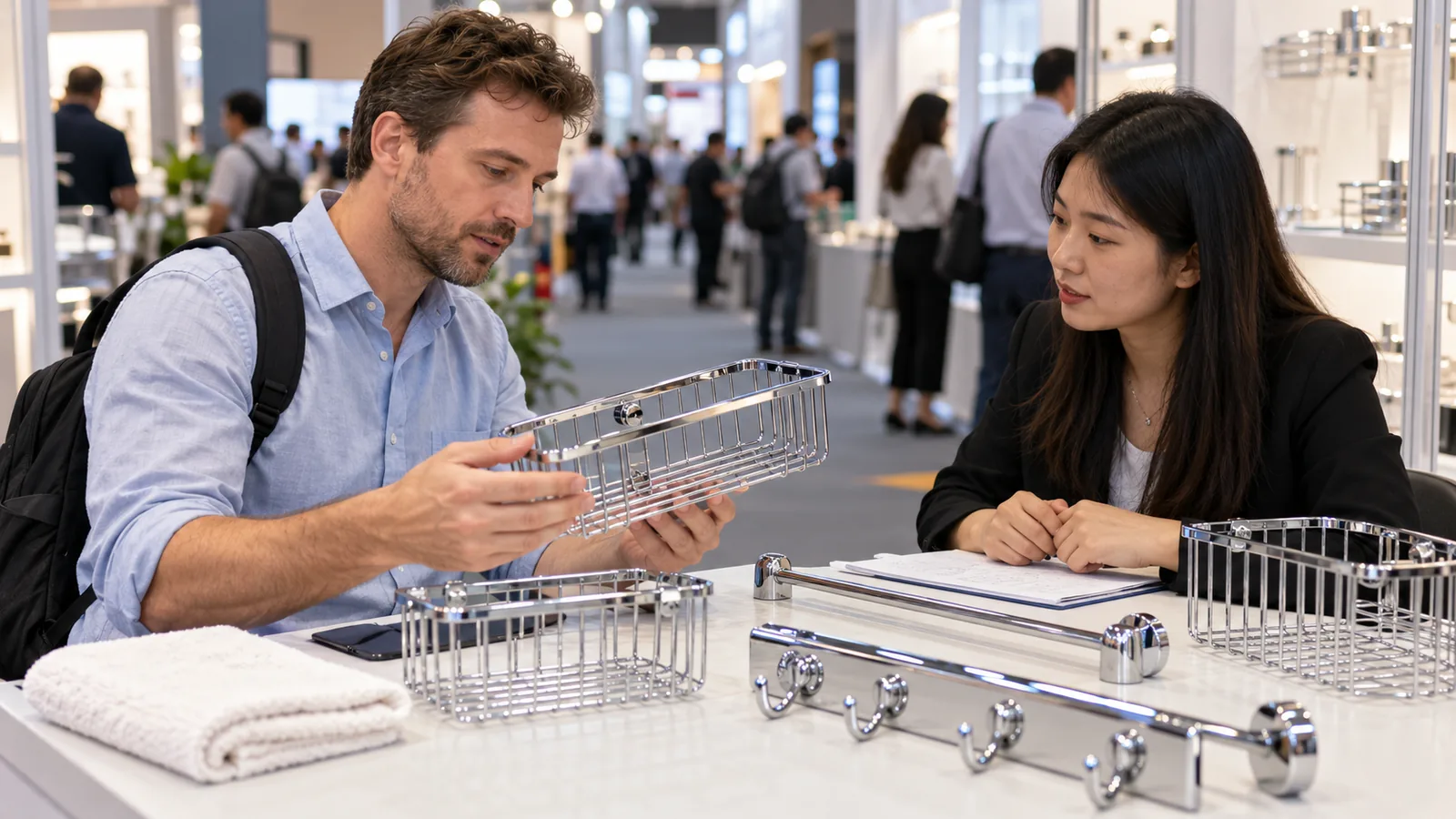
To plan how to get to Canton Fair, first match your product category to the correct spring or autumn phase, then compare complete flight itineraries into Guangzhou, select a current official route to the Pazhou exhibition complex, reserve accommodation around your meeting plan, and finish buyer-badge registration before departure. Use the Canton Fair’s current buyer guide for dates, category placement, maps, shuttle notices and badge instructions; those details can change between sessions.
For European importers sourcing bathroom, kitchen or home-storage hardware, the trip is most useful when travel logistics and supplier research are planned together. A correct flight is not enough if the relevant product halls are in a different phase, the hotel adds a difficult daily transfer, or meetings are not tied to a clear product brief. This guide gives you a repeatable planning sequence without assuming a particular airline, hotel, visa route or fair-session schedule.
Choose the fair phase, then compare complete flight itineraries
The Canton Fair takes place in Guangzhou in spring and autumn, with product categories assigned to different phases. Check the official Canton Fair schedule and product categories before paying for a ticket. A category name may sit within a broad exhibition section, so confirm that the current phase actually includes the product type you intend to source.
For a bathroom-accessory or home-organization buyer, build a short list of the items you want to compare: for example, metal shower baskets, towel racks, kitchen storage racks or wire baskets. Use the fair’s current product search and phase information to identify the right days. If the fair divides your categories across phases, decide whether one trip can cover enough of the range or whether a future session is more practical.
The venue is the China Import and Export Fair Complex in Pazhou, Guangzhou. The official Buyer Guide is the best starting point for the latest attendance guidance, buyer registration, product search, maps, shuttle links and onsite services. Treat older travel blogs, saved screenshots and last-session maps as background only; they may describe a previous phase, hall layout or service schedule.
| Planning question | What to confirm before booking |
|---|---|
| Which phase fits my product list? | Current-session dates and product categories on the official fair site |
| Which airport should I use? | The full itinerary from my departure city, arrival time and onward transfer |
| Where will I meet suppliers? | Hall or area, appointment time and the current venue map |
| Where should I stay? | Daily commute, meeting locations, cancellation terms and any confirmed shuttle |
| Can I enter the fair? | Current buyer registration, badge eligibility, ID and collection instructions |
Search from the European airport that is practical for your team, then compare the whole itinerary rather than choosing only by headline flight time. Include connections, arrival time, baggage allowance, transfer time after landing, likely jet lag, and whether you need a buffer before the first fair day. A late arrival followed by an early supplier meeting may be a poor trade even if the ticket is cheaper.
Guangzhou Baiyun International Airport is the local airport to check first for a Guangzhou-based visit. Depending on your origin and available schedule, an itinerary through another regional hub may also appear. Do not assume a direct service exists from every European city, or that an alternate airport is automatically faster or simpler. Compare the actual date-specific timetable, total transit, baggage transfer and ground journey to your hotel.
Some buyers consider entering through Hong Kong and continuing to Guangzhou. That can be a reasonable option only when the current flight, border-entry requirements, ferry or rail connection, luggage arrangements and arrival times fit the trip. It adds another cross-border leg and should not be treated as a default shortcut. Check official carrier and transport information for the specific travel date, and allow a buffer if separate tickets or terminals are involved.
When comparing how to get to Canton Fair from a European departure city, assess at least two complete itineraries and record:
- scheduled arrival time in Guangzhou or the alternate gateway;
- number of connections and whether bags are checked through;
- the final transfer to the hotel, including its operating hours;
- change or cancellation conditions if the fair schedule or meeting plan shifts;
- time needed for sleep, badge collection and a first-day orientation;
- return-flight timing against the last planned supplier meetings.
Plan the airport-to-Pazhou transfer from current information
The best airport transfer depends on where you land, when you arrive, your luggage and the exhibition area you need. Guangzhou currently offers metro, rail, tram, taxi or ride-hailing, shuttle and ferry connections in different parts of the journey, but the useful route and service availability are date- and location-specific. Read the current official Guangzhou transport guide for Canton Fair visitors alongside the Canton Fair’s own buyer map before departure. A reliable answer to how to get to Canton Fair is therefore tied to your arrival point, venue area and travel date—not a single route copied from an old guide.
If using public transport, compare the complete trip from your arrival terminal to the hotel or fair entrance, including transfers and walking distance with luggage. A station may serve one venue area more conveniently than another. Confirm station exits, operating hours, temporary fair shuttles, accessibility needs and any service changes in the current official map or local transport notice. Do not rely on a route description copied from a prior session.
For a taxi or ride-hailing trip, save the destination in Chinese as well as English, use official pickup instructions, and check the airport’s current pickup location. For a late arrival, heavy sample luggage, a group or a tight meeting start, compare the cost and time of a direct transfer against public transport. This is a buyer-specific convenience decision, not a promise that one mode is always faster.
Keep a fallback route. Save the hotel address, the fair complex address and a screenshot or offline copy of the current map. If mobile data is unavailable, a printed or offline destination and the hotel’s contact details can make the final leg easier to explain. Check roaming, eSIM or local connectivity options with your provider before travel; do not assume that an app, payment method or ride service will work identically for every visitor.
Choose a hotel around the work plan
Accommodation near Pazhou can reduce the daily commute to the exhibition complex. A hotel in another Guangzhou district may suit buyers who also have city appointments, supplier offices or evening meetings. Neither location is automatically best: compare the daily route, total trip cost, cancellation rules, breakfast timing, luggage storage and the location of your scheduled meetings.
Use the official Canton Fair accommodation and travel platform as one place to review current options, then verify each hotel’s terms directly. A listed property or a past-session recommendation does not guarantee a room, a shuttle seat or a particular service this time. If a hotel says it operates a fair shuttle, confirm the dates, booking method, departure point, schedule and return service in writing before relying on it.
Build the hotel decision around a realistic day. If you plan to arrive before opening, leave after a late supplier meeting, or visit more than one venue area, a route that looks short on a map may still require extra time. If you have mobility needs, a tight schedule or unusually large samples, contact the hotel and transport operator about the specific arrangements rather than inferring accessibility from a listing.
Food and rest also affect meeting quality. Check whether breakfast hours fit your departure, identify several nearby meal options, and contact providers directly about dietary or allergy requirements. Do not rely on an unverified claim that a hotel, restaurant or service can meet a medical need. Keep water, rest breaks and a manageable appointment schedule in the plan.
Complete buyer registration before departure
The fair’s badge rules can vary by visitor type and session. Complete pre-registration through the official Buyer Service System and follow the current overseas buyer badge guide. Check what applies to your identity document and role, whether an existing badge remains valid, which originals are required, and how and where a new badge is collected.
Save the registration confirmation and any QR code where you can access them without relying on an internet connection. Carry the original identification specified by the organizer. If colleagues are attending under the same company, confirm each person’s status and badge instructions individually instead of assuming one buyer’s registration covers the group.
Entry permission for China is separate from fair registration. Visa or visa-free rules depend on the traveller’s passport, purpose and travel date, and may change. Check current official Chinese consular or immigration guidance for each traveller. A rule for one European nationality is not proof of the rule for another, and a Canton Fair invitation or badge should not be treated as a visa approval.
Prepare supplier meetings as sourcing work
The fair is more productive when each meeting answers a buyer decision. Before travelling, create a short product brief for each category you want to discuss. Include intended market, product use, approximate size, finish preference, expected packaging, target order range and the questions that matter most. Mark confirmed requirements separately from preferences and open questions.
For custom bathroom or home-storage hardware, useful questions may include:
- Can the supplier review a buyer drawing, physical sample or reference product?
- Which dimensions, mounting points or functions are critical to the intended use?
- What material and finish options are appropriate for the buyer’s target market and environment?
- What information is needed before the supplier can discuss an initial sample?
- Which packaging, labeling or retail-pack details must be included in the quotation scope?
- How will the parties identify the approved sample or drawing revision?
- What is included or excluded from the quoted product, such as hardware, fasteners or installation instructions?
- What checks will the buyer and supplier use to review the sample and later production lot?
These are discussion prompts, not a claim that every supplier offers the same process or terms. Record the supplier’s actual answer, what evidence was shown, which assumptions remain open and who owns the next step. A fair conversation is an initial screening point; it does not replace technical review, sample approval, factory qualification or written order terms.
Bring a compact meeting kit: a prioritized product list, target-market notes, a digital folder with drawings and reference photos, printed copies of the most important specifications, a notebook and a calendar with open appointment slots. If you share files, label each revision and state whether it is for discussion or approval. Do not hand out confidential information unnecessarily; share only what is needed for the stage of discussion.
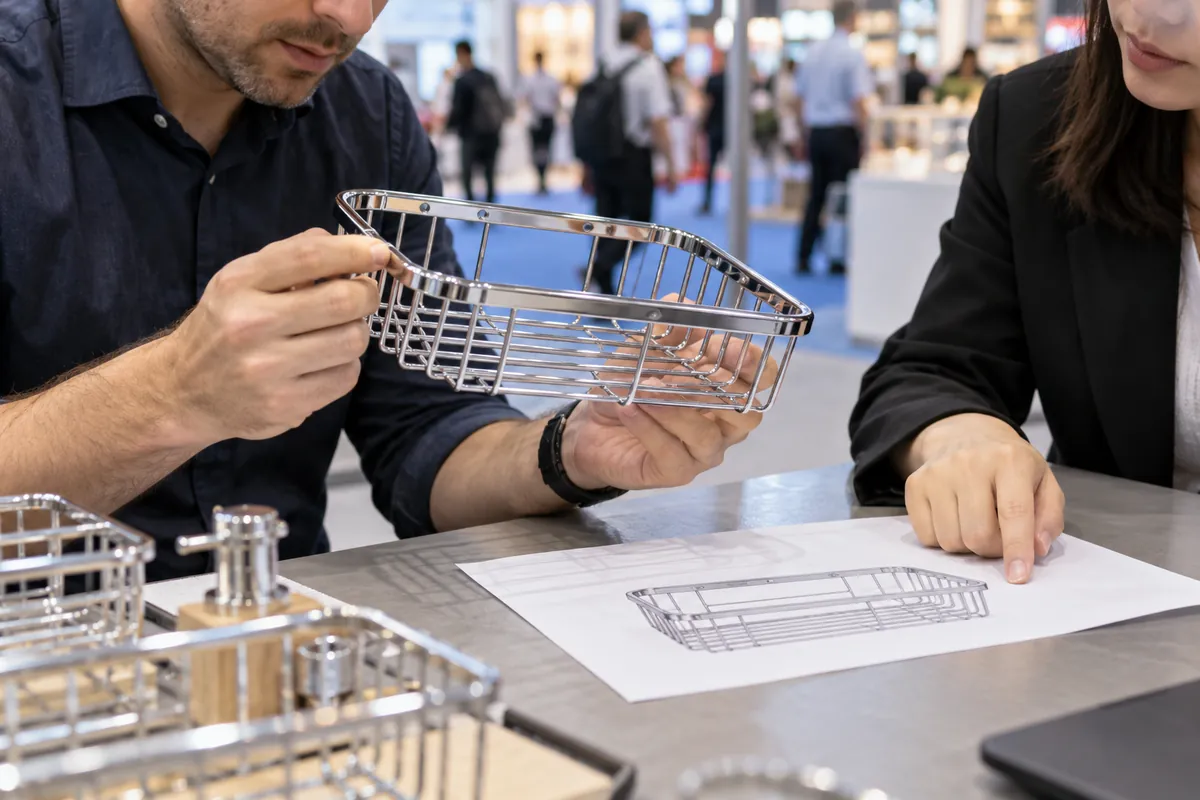
For a later technical handoff, Koitor’s guide on preparing drawings or samples for a custom hardware factory explains the information that can make a follow-up review more useful. If a buyer has CAD and drawing files, the STEP, DXF and PDF RFQ file-format guide covers a distinct part of the subsequent RFQ process.
Make the visit manageable day by day
Large exhibition venues can involve substantial walking, queues and competing appointments. Group meetings by area where possible, leave a margin between appointments, and avoid scheduling every hour from opening to close. Keep a daily priority list so that one delayed meeting does not erase the most important supplier conversations.
After each meeting, write a short record while the details are fresh:
- Supplier identity and the products actually discussed.
- The buyer requirements the supplier understood.
- Any capability, sample, material or process evidence shown—and what it does not prove.
- Missing information or assumptions that need follow-up.
- Agreed next action, responsible person and due date.
- Whether the supplier is a candidate for a drawing review, sample request or further qualification.
Photographing a sample or booth may be restricted or unwelcome. Ask first, follow venue and supplier instructions, and do not photograph confidential designs or another company’s documents without permission. If the supplier gives a brochure or sample, label its source and date so it is not confused with an approved specification.
The purpose is not to make a buying decision from a brief conversation. Use the event to identify candidates and compare what they can explain. Later, align quotations on the same product scope, material, finish, quantity, packaging and acceptance criteria. If suppliers interpret the brief differently, resolve the specification before comparing their prices.
A practical pre-trip checklist for European buyers
| Timing | Buyer action |
|---|---|
| Before booking | Confirm the current fair phase and category; compare full flight itineraries and entry requirements |
| After booking | Select a hotel based on actual meeting locations, cancellation terms and verified transport |
| Before departure | Complete buyer registration; save badge documents, maps, addresses and transport details offline |
| One to two weeks ahead | Request supplier appointments; send a concise, version-controlled product brief |
| Each evening at the fair | Record meeting outcomes, evidence, open questions and agreed follow-up actions |
| After returning | Compare suppliers against the same specification and request samples or quotations with clear scope |
Keep one source of truth for the trip: the official fair session page for dates and categories, the official Buyer Guide for registration and venue information, and current transport notices for routes. Recheck them shortly before departure. If the site changes a badge process, hall map, shuttle or service time, update your plan rather than forcing the old itinerary to fit.
Frequently asked questions
Which airport should a European buyer fly into?
Compare available itineraries to Guangzhou Baiyun International Airport first, then assess any alternate gateway using the complete flight, border and onward-transfer journey. The best option depends on the departure city, travel date, arrival time, ticket conditions and luggage. Do not assume that a direct flight or the same route is available from every European city.
Where should I stay for the Canton Fair?
Choose based on your meeting locations, daily commute, budget and whether you have appointments elsewhere in Guangzhou. A nearby hotel may reduce the venue commute; a central location may fit a broader city schedule. Verify current shuttle service, rates, room availability and cancellation conditions directly.
Can I collect my buyer badge at the airport or a hotel?
The available locations and hours can change by session and buyer type. Follow the latest official badge guide and Buyer Service System instructions; do not rely on an old list of hotels or airport counters.
What should I bring to meet bathroom hardware suppliers?
Bring a concise product brief, target use and market, approximate dimensions, reference images or drawings, packaging requirements, expected quantity range and a prioritized question list. Identify what is fixed and what can change. A shared brief makes initial discussions clearer but does not replace a controlled specification or sample approval.
Does visiting the fair qualify a supplier?
No. A meeting can help identify potential suppliers and ask about their processes, but it does not independently prove manufacturing capability, compliance, production consistency or product performance. Follow up with appropriate document checks, scope-aligned quotations, sample evaluation and any project-specific qualification steps.
For buyers planning an OEM bathroom or home-storage project, a fair visit is most valuable when it produces comparable supplier notes and clear follow-up actions. Koitor is a family-owned custom metal hardware factory focused on bathroom and home-storage products; buyers can review its custom bathroom hardware manufacturing overview and prepare a product brief before starting a discussion. Contact Koitor only when you are ready to share the intended product, target market, approximate size, finish direction and expected order range.
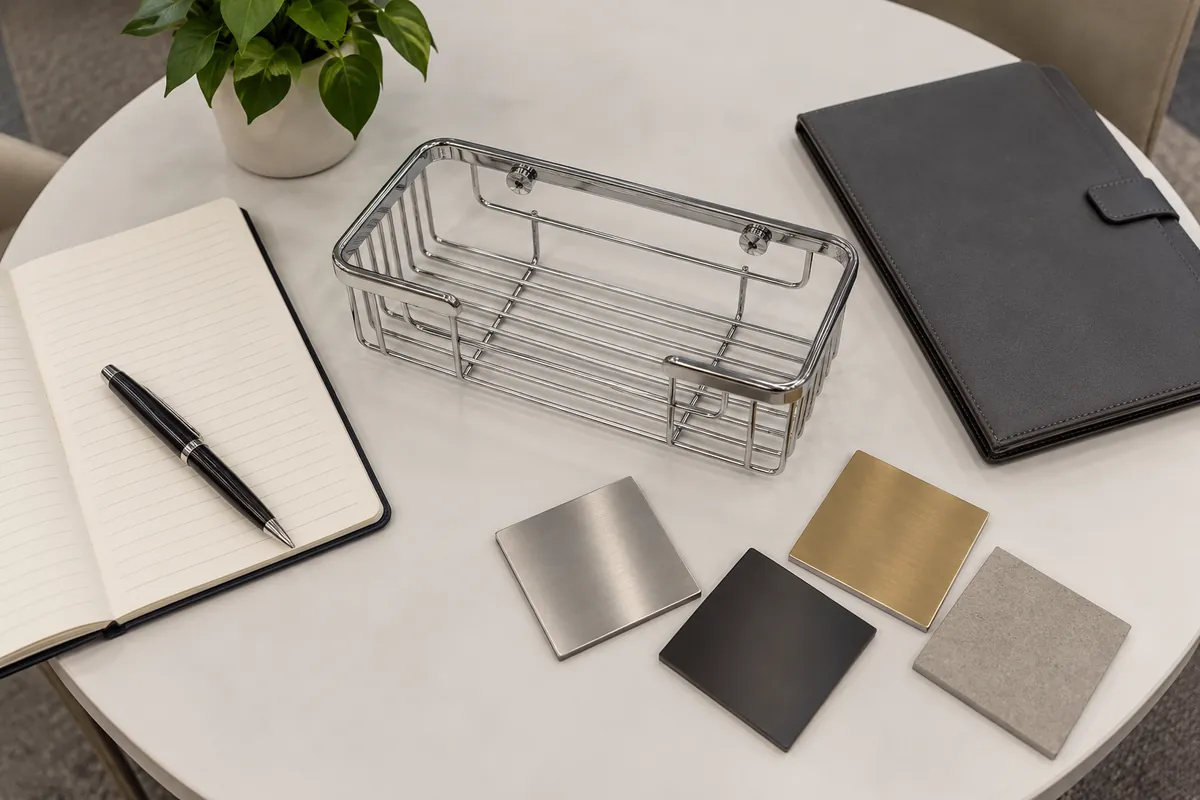
Prepare Your Hardware Sourcing Brief
Bring a clear product use, target market, approximate size, finish direction, packaging needs and open questions to your next supplier conversation. Koitor can discuss custom bathroom hardware based on the information you provide; a trade-fair meeting is only an initial sourcing step.
OEM / PRIVATE LABEL
Turn this sourcing guide into a product brief
Share your target product, size, finish, order quantity and packaging requirements. Your team receives a practical manufacturability review before quotation.

 English
 Español
 Português
 Français
 Deutsch
 العربية